Showing posts with label heat. Show all posts

Tuesday, April 4, 2017

Storm Windows? On A Boat??

This post originally appeared on Windborne in Puget Sound

We use Eolian all winter long (at the dock anyway), therefore we heat her all winter long.  On houses, storm windows are used to provide an extra layer of insulation against the winter cold and weather.  If you have ports like these:

Do you have ports like this?
...you can easily make and fit storm windows for them too!  I  don't take credit for this idea - it came from Drew, 6 years ago.  

But in any case, it couldn't be simpler.  First you need to remove the screens from your ports (we don't have ours installed - no bugs to speak of in the PNW... :^) ).   It is easy to do this.  The rubber gasket that traps the screens in place is not glued in - it is just wedged into a slot on the port frame:

Just pull it out
You just need to pull it out.  If you haven't ever had yours off, they may be glued in there with algae and other growth tho.  With the gasket off, simply lift the screen out of its recess.

Of course, you'll need the actual storm windows.  For these you'll want some kind of thin plastic - less than 1/8" (the thickness of the screens).  I made mine out of the glazing from a couple of old poster frames that were destined for the recycle bin.  I just traced the outline of the screen on the plastic sheet and then cut them out on my bandsaw.  I suppose you could use a sabre saw, or even a hack saw (tho the corners would be tedious).  And you might even want to smooth out the edges with a bench grinder and/or a file - I did this with mine.

And just slip them in where the screens were

And then you just drop them into the recess that the screen was in, and reinstall the rubber gasket.  (If you look closely, you'll notice that there is a joint on the gasket - this should go to the top.)  Be sure to get the gasket flange firmly pushed into the slot all the way around, otherwise the window won't close - you could break it if you try.

Easy peasy.


Tuesday, November 17, 2015

A Civilized Idea

We recently returned from a trip to the UK; while there we saw a bathroom fixture which was ubiquitous there but virtually unknown in the USA:  the heated towel rack. Do you have any idea how wonderful it is to wrap yourself in a warm towel after a shower? Probably not, sadly. Oh, and the towels dry off much sooner hanging on a heated rack too.  It's a very civilized idea.

Adam and Adrian recently installed one of these on nb Briar Rose. Theirs is hot water heated - a very common solution in the UK, where forced air heating systems are virtually unknown. If you have hot water heat in your boat, this would work for you too. (Electrically heated models are also available and only draw 75 watts or so).
I have to work all weekend, but Adrian went up to the boat today -- taking much much longer than usual because of all the bank holiday traffic.  While Briar Rose has been at Calcutt, the leaking radiator in the shower room has been changed for a heated towel rail.

Thursday, January 8, 2015

A Magnetic Personality

This post originally appeared on Windborne in Puget Sound

Like the rest of the country, the Pacific Northwest has been experiencing unseasonably cold temperatures of late (well, ok - for us, 32° is unseasonable).  And of course you know what this means...  our heating system failed.  Just like roof leaks only appear when it rains, heating plants never fail in the summer.  Oh well.

The first clue was that the thermostat display was completely blank.  Well, and the boat was cold, too.  Some back and forth with Marinaire, the heat pump manufacturer (great customer service, by the way), disclosed that there was a fuse on the main circuit board - a fuse hidden beneath a blue vinyl cover.  Yep, it was blown.  When it was replaced, the replacement blew immediately as the fan and circulation pump tried to start.  Blowing a couple more fuses revealed that the problem was the circulating pump - the pump that provides sea water to the heat pump.  (It is by the chilling of this sea water that the heat pump produces heat.)

Here's the pump after I pulled it out:
Salt water short-out
Yup - the shaft seal failed and sea water was trickling back along the shaft and into the electric motor.  Bzzzt!

So I bit the bullet and ordered a new pump.  This one has a magnetically driven impeller - that is, there is no shaft seal.  The motor drives a cup-shaped magnet; the pump body extends into the cup but has no opening.  The impeller has an imbedded magnet, and is thus driven by the motor without any mechanical coupling and without a shaft seal.  As you might expect, this kind of pump is more expensive.  But the technology is worth it.


As a bonus, the pump body itself (the white plastic portion) is considerably larger than in the old pump, and is much more substantially made.  The inlet and outlet are larger as well.


Since the pump is physically larger, it wouldn't fit where the old one had been.  So there was some fooling around involved in finding a location that...
  • was below the water line as far as possible - centrifugal pumps are not self-priming,
  • was not actually on the floor of the bilge compartment, since that would promote rusting of the motor base,
  • did not interfere with access to the nearby battery, 
  • minimized the required plumbing changes,
  • and finally, did not block the access door you see in the background to the right.
And of course I had to change the plumbing to use the new location.  If you can believe it, I actually ended up with fewer fittings in the new installation!

Based on the appearance of the discharge water stream, I'd estimate that this pump is delivering twice as much water as the old one, even tho both are rated at 500 GPH.

The boat is warm!  And now I expect to be able to forget about this pump for a long while, just as I have been able to with the refrigeration circulating pump.

Magnetic personality?  I must have one.  Can I make a recommendation here?  Avoid sea water pumps that have shaft seals wherever possible.  Like the cosmetic ad says, they're more expensive, but you're worth it.

Thursday, January 10, 2013

The Cold of Winter

Way down south, Scott on s/v Valkier has some ideas to make the inside warmer when it is "cold" outside.  These ideas will work equally well when it is below freezing...
So after a great post title like that I have to admit anyone north of us is going to hate me when I tell how cold it is. :) mid 40′s to 70ish.

So we don’t have it that bad but it has been getting pretty cold on the boat. In an effort to fix it we have been looking at heaters/stoves etc.. The propane one that we have works great but providing it with propane is a bit of a pain as well as expensive.

We have been using a little resistive electric floor heater. One of the little ones and it has been doing ok and surprisingly not costing a huge amount to run. Our top power bill so far has been 50 dollars. After finding that just about anything in the way of buying and installing a diesel/wood/anything stove/heater is going to start at a base of a grand and go up I decided to postpone that project and trying something a lot simpler. :) One 10 dollar window shrink kit from Home Depot.

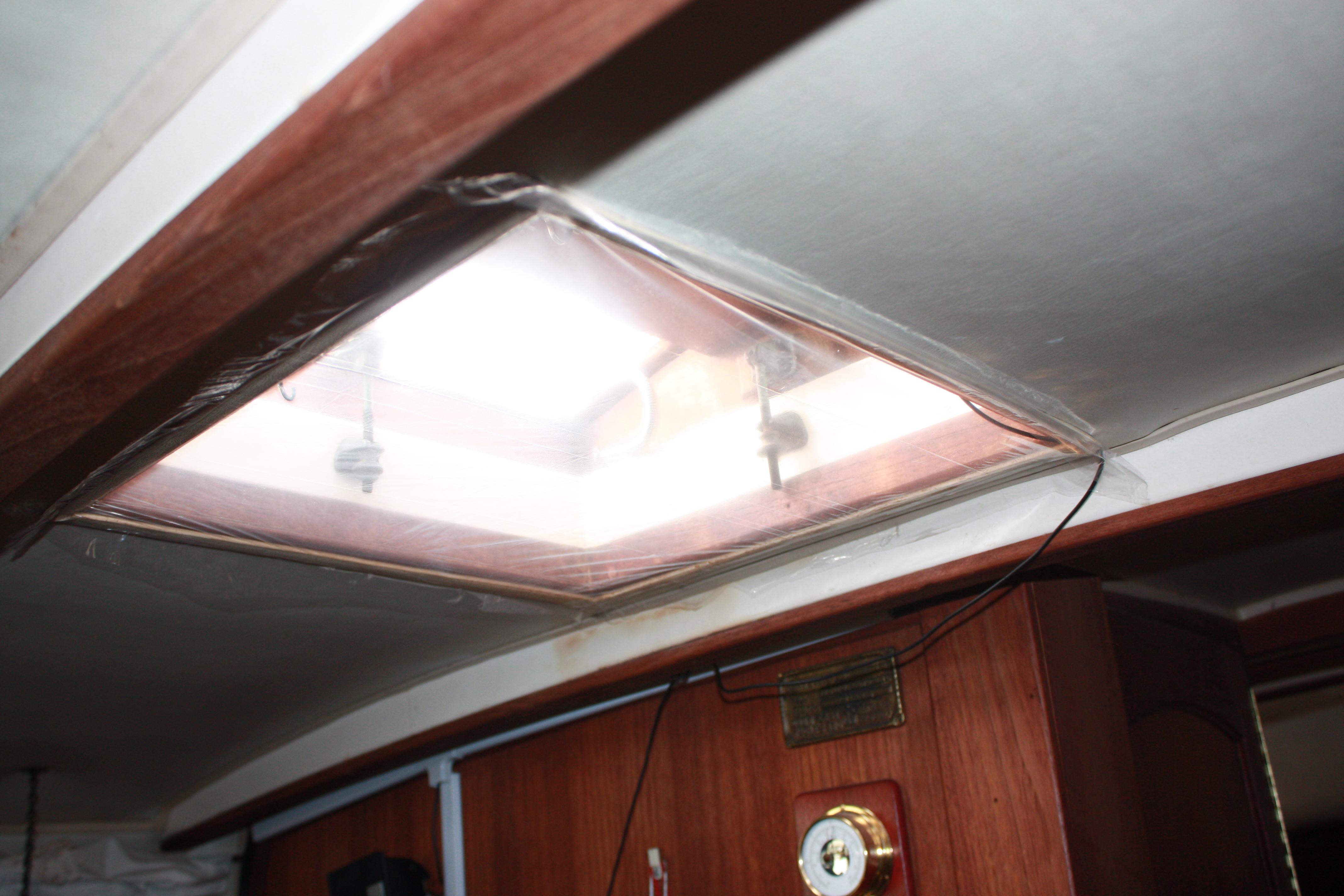
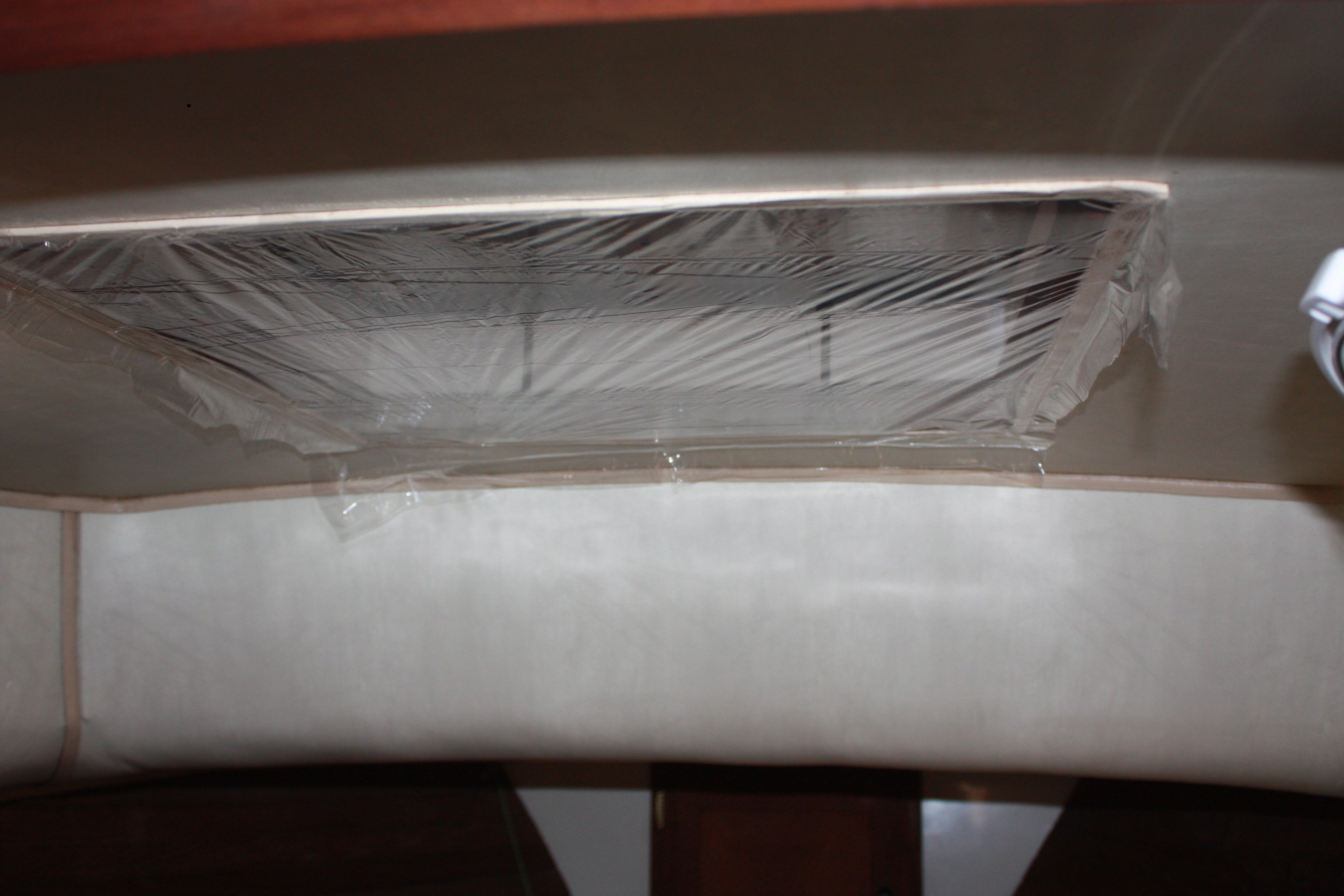
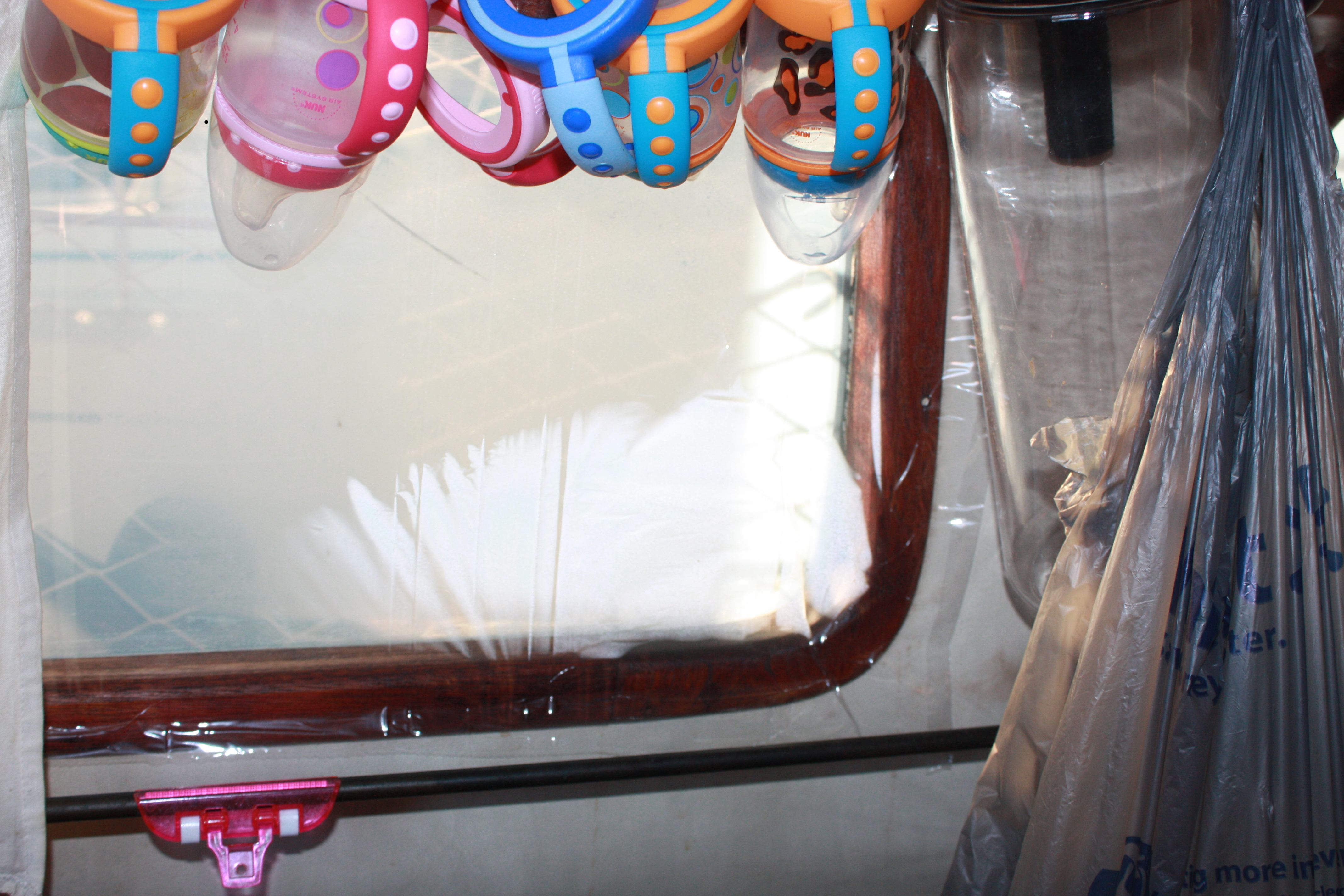
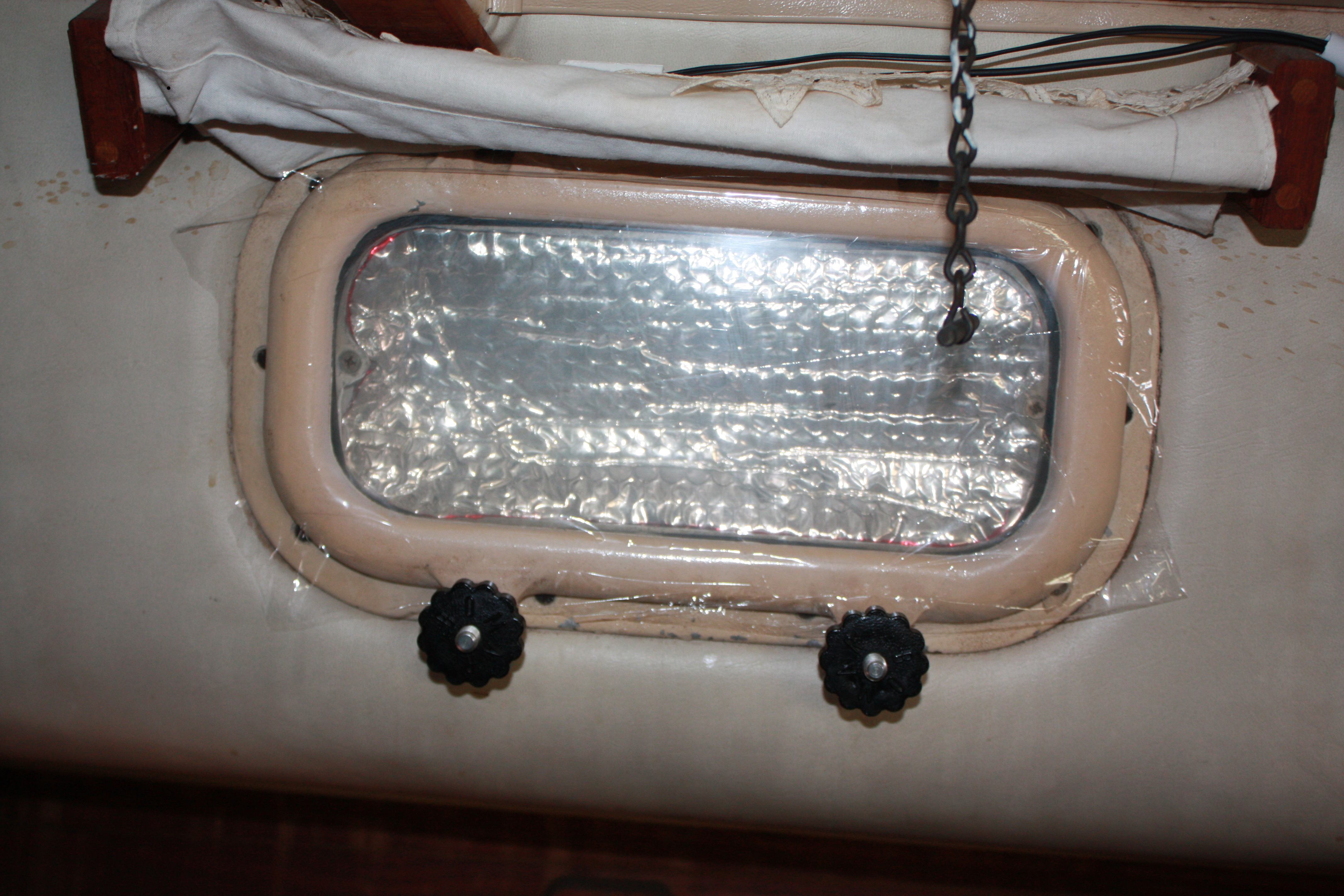
I have to say after doing each of the 6 port lights, both the forward hatch and salon skylight as well as the 4 big windows in the salon that we have noticed a large difference. It is much warmer. The second thing we have done is cut out inserts using reflectix insulating material and putting it outside the port lights, between them and the screens. On the one hand this definitely helps keep it warm but it also stops all light through the port lights.

The double sided tape goes on the vinyl trim

vberth hatch


galley curtain rods are a great place to store sippy cups


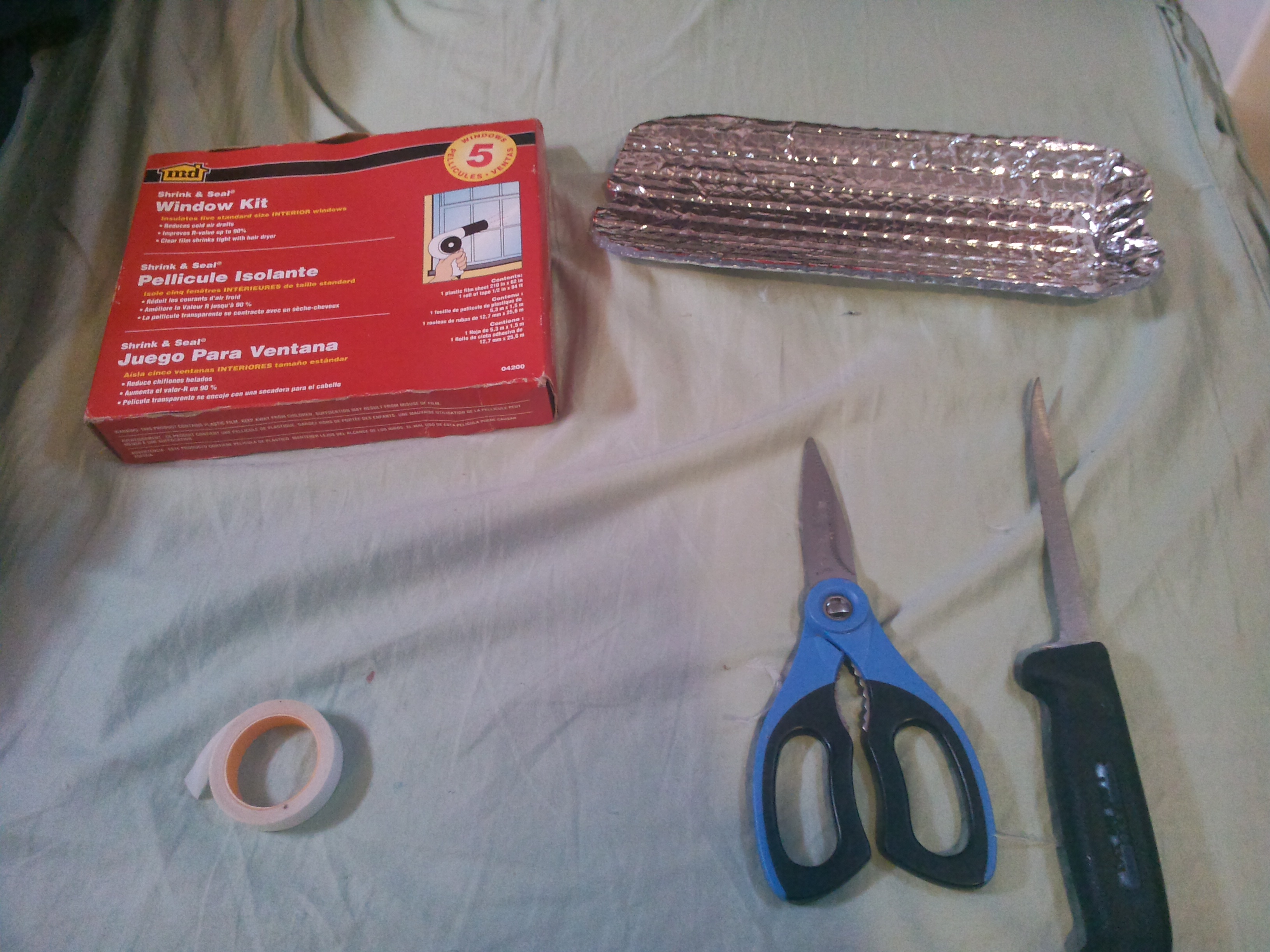
Tape, Scissors, knife, shrink wrap film and reflectix.
The only think missing is the hair dryer. :)
Have to do that later when we bring one from the house.


Thursday, July 12, 2012

Oil Lamp Mounting & Heat Shield

Please welcome new contributor Rick of s/v Cay of Sea!  Rick shares with us a clever adaptation of a brass door kick plate, thus avoiding the "marine tax"...
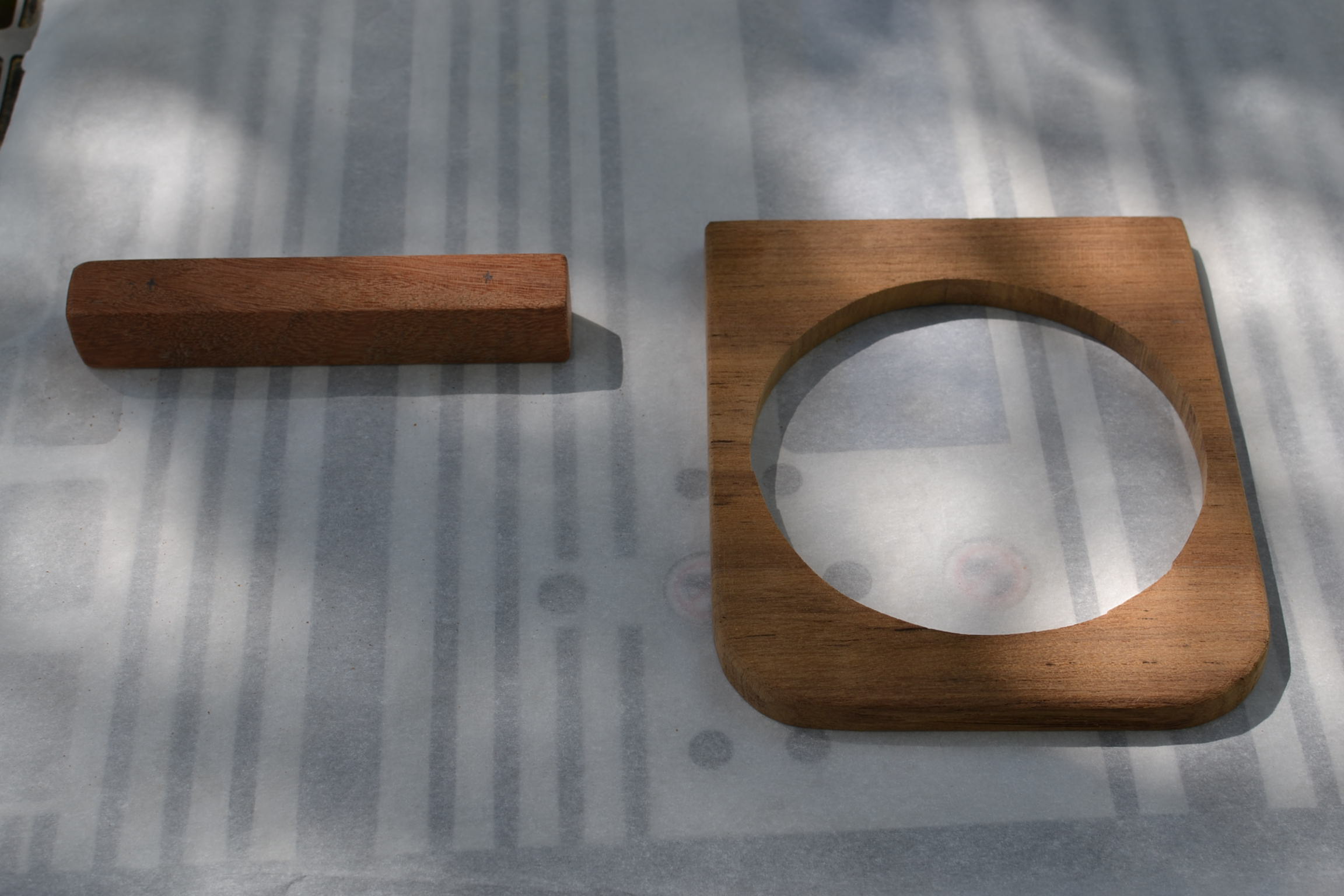
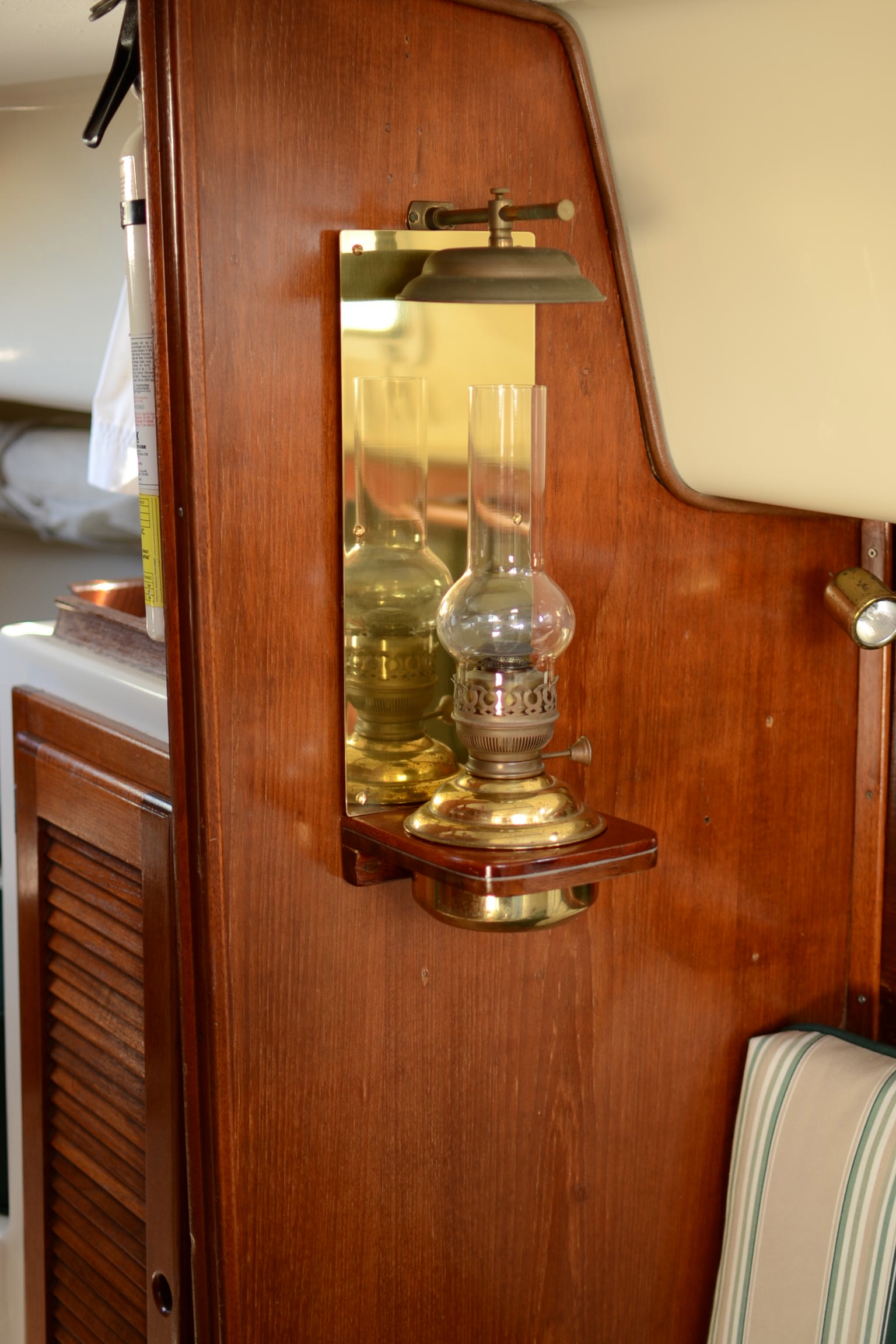
Warm weather has ensured good luck with epoxy curing, and I’ve finished, broken, and remade the lamp bracket – which required epoxy for success.  I never do anything right the first time, and the lamp bracket was no exception.  First of all, check this photo of the bracket from my last post.  Notice anything special about the grain of the wood?
The grain runs across the width

Yeah, see how the grain runs across the narrow section of the bracket?  That creates a weak spot.  I didn’t realize that until I broke it across there with the slightest of effort.  So, here is what I did to fix it:

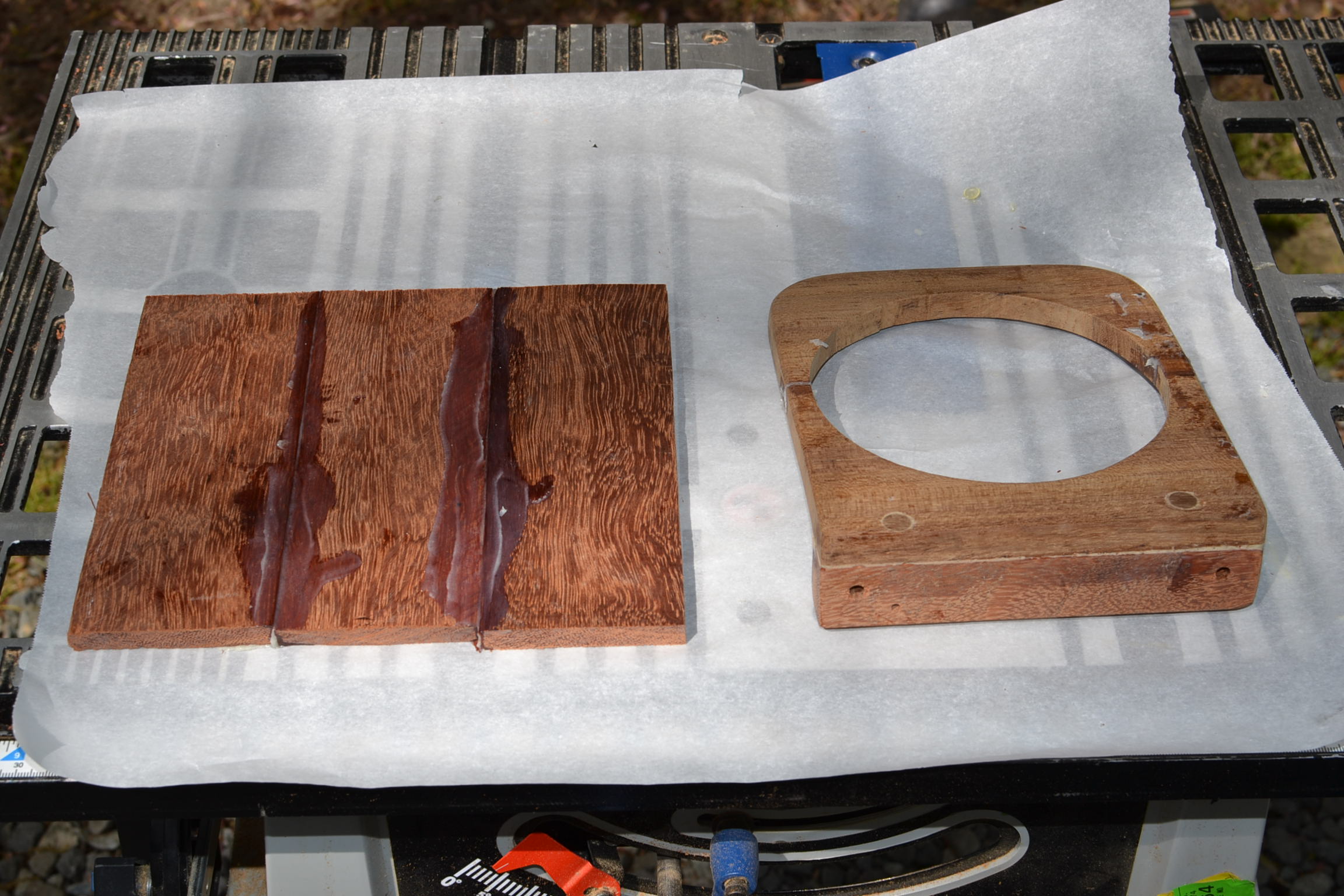
A new edge-glued teak board
The new board you see glued up was to be the new bracket oriented with the grain running the other way.  Then I had a truly inspired idea: what if I glued the new on top of the old (repaired) bracket?  That would be very strong indeed, with no tendency to break across the narrow dimension.  That’s what I did.  Here it is installed.

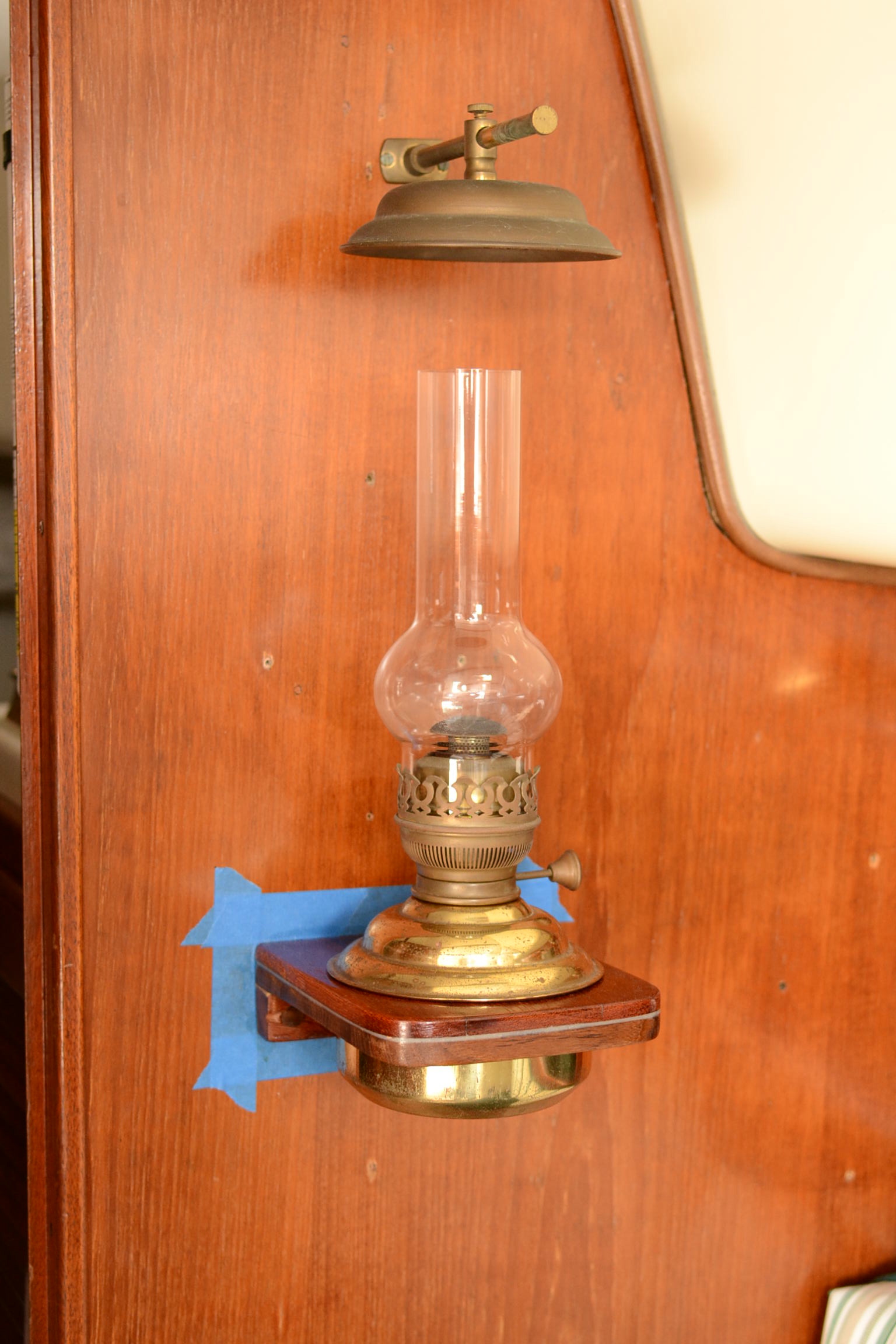
Bracket mounted
You can see the two layers of wood here, and it is very secure.  I visited with my hardware store only twice to get the fasteners sized correctly, but managed to mount it and varnish it twice.
I think I’m going to install a heat shield on the bulkhead behind the lamp.  I don’t know if the bulkhead is going to get hot or not, but there is no need to take a chance.

I dug through my shed and found the door kick-plate.  Happily, it’s polished brass, so will match the lamp well.  Also happily, the edges and corners were pre-drilled.  All I had to do was purchase stand-offs and fasteners.  The stand-offs were pretty straightforward.  7/16ths diameter, 1/2 inch long steel sleeves did the trick.  I got the correct fasteners on my second trip to the hardware store, because I got the wrong type of screw head on the first trip.  Yeah – story of my life.  I never get it right the first time around.  For the record, unless your material is counter-sunk, flat-head screws won’t fit flush.  I got regular round-headed screws and it looks and works much better.

I drilled mounting holes in the bulkhead for the plate, which I cut to size with my Dremel.  I experimented with sheet metal shears, but they left a distorted, slightly bent edge.  The Dremel was clean, and the rough edge was easy to smooth with sandpaper and sanding drum on my regular drill.

Now mounted on the bulkhead, it looks like this:
Oil Lamp with Heat Shield
Unanticipated benefit -
reflection of lamp provides
more light in the area.

Thursday, November 17, 2011

Bring on The Cold

This project is too large to qualify as a Small boat project... but it is so darn cool that I couldn't resist including it here.  Mike of s/v Chalice, one of our uber-craftsmen here at Small Boat Projects needed a wood-burning heater to fit his dimensions.  So he made one.
After looking at many different options for heat on the boat, I decided in the end to build our own.

Many folks seem to want a nice little wood stove on their boat, but there are no plans I could find and the small cast iron ones that are available or either expensive or appear to be cheaply constructed.

So. I designed my own. For the main items I had a local welding shop use their plasma cutter to cut out the parts. The rest I hand made.

From Update 3-2-2011 Wood stove


The Grate I could have made easily, but I let them as it sped up the process a little.
The entire Stove was welded with a small TIG Process torch. TIG is easy, just takes a lot of practice to be good. Although in these next few pics I actually had started welding with my MIG welder. It does not like 1/4 inch steel, so I rewelded the door and box with TIG.

I next assembled the Box and the door.

From Update 3-2-2011 Wood stove

From Update 3-2-2011 Wood stove


From Update 3-2-2011 Wood stove


You will notice the rails below the grate, that is for the stainless ash pan.
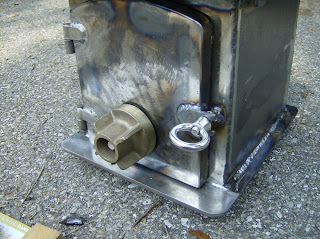
The door has a cast bronze damper I ordered from Washington state. The damper is mounted on a stainless steel bolt that is welded to the door. I cut the bolt head off.

From Update 3-2-2011 Wood stove


Next I welded the hinges on and the feet on the bottom plate and the smoke stack connection on the top plate. This pic is with it sitting together but not welded. The hinges is 1/4 inch rod with 1/8 in x 3/4 inch strap bent around the rod and welded to only one part of the set. The door is removable only when opened fully. This is a design feature.

From Update 3-2-2011 Wood stove

From Update 3-2-2011 Wood stove


Next I needed to weld the top and bottom on and then make the sea rail.
The sea rail is a piece of stainless steel strap 1 inch x 3/16 I believe. It is welded to (4) 3/8 inch stainless steel bolts.

From Update 6-8-2011 Wood Stove

From Update 6-8-2011 Wood Stove


I had to machine the sea rail mounts. This is before and after and also it was polished.

From Update 6-8-2011 Wood Stove


Then weld it all up. This was the hardest part to weld. Very little room to get to it. As you probably guessed, it bolts on, so it is removable.

From Update 6-8-2011 Wood Stove


Now I had to make the part that will make this stove efficient. This part really should be remade as it does not look like it should, but I don't have time or money to re do it at the moment. It will work though.

From Update 6-8-2011 Wood Stove


Last but not least I created a door catch/lock.

From Update 6-8-2011 Wood Stove


Now to test it.

From Update 6-8-2011 Wood Stove


Yes it boiled water fairly quickly.
Now to clean it up and finish it with a extremely high heat paint anf some polishing.

From Update 6-8-2011 Wood Stove


From Update 6-8-2011 Wood Stove


From Update 6-8-2011 Wood Stove


A 12 inch ruler for size. The fire box is only 9 inches square.

From Update 6-8-2011 Wood Stove

From Update 6-8-2011 Wood Stove

From Update 6-8-2011 Wood Stove


And finally in it's install location. I don't have it bolted to the shelf as of yet.
From Update 6-8-2011 Wood Stove

From Update 10-22-2011


I hope you all enjoy.  Plans and precut plates may be available. Email me for more info.

Monday, May 16, 2011

Endless hot water

Now there's something we'd all like to have...  Paul on s/v Solace will have it now, even at anchor!

One thing lead to another with these boat projects. This blog is about linking three boat projects, and each one is worthy of it's own post. But for now, I'll give a precise of the  events.
Firstly, in the shower cubicle of the boat, I had a cupboard with a large 12 gallon hot water tank that I wanted to replace with a washing machine. So I set about removing the HW tank and then installing the washing machine. Because the doors were only 18 inches wide, the WM had to be disassembled to get through the door and then reassembled in-situ. This may become another blog at some time.
Now, because I had removed the HW tank and our only method of heating water, I then set about installing a califont, or probably better known as a "heat as you go, propane water heating unit". This was a unit sold in New Zealand, but I have seen similar units sold in RV World in the USA. The igniter is powered by two "D" size batteries, and is small enough to install in boats and RV's.

I installed the unit under the aft vanity unit on a bulkhead. I have a means of varying the temperature output and have placed some blue masking tape for the shower temperature so that we don't need to use the mixer tap to get the temperature right. The ducting is 4 feet in length and vents to the bilge. Heat at the end of the 4 foot ducting is almost nil, and one can hold your hand over it easily. I saw many units installed on other boats with out the ducting to outside, and as others have said, "it's no worse than running the stove". Propane and co2 monitors are a safety measure. Now we have hot water on tap with no need to run the generator to supply power to the old HW tank.
Finally, when installing the propane califont, I had to install a propane hose to the unit. Initially, I "Teed" into the existing propane line with the one propane cut off switch to be used to supply both the califont and the stove. This however proved to be less than satisfactory, because the califont would remove some of the gas from the stove line while it was in use. This then made igniting the stove burners, a little more time consuming as we had to wait for the gas to flow back through the line to the stove.
New Brass T to Propane Tank
The solution was to use another solenoid and regulator for the new califont and "Tee" in both solenoid/regulators to that "Tee". Each solenoid has it's own on/off switch.
We also plumbed a hot water line to the aft of the boat so that we can have hot showers on the aft deck. We also think we will use less propane, than heating a kettle of hot water on the stove to do the dishes. I'll comment on that as data comes to hand.
The "T" also allows us to carry a spare propane tank to swap to when running out on the tank in use.
I am curious to find out how the propane usage will work out in practice.

Friday, March 25, 2011

1000 words

The picture is worth...  Mike of  s/v Chalice solves the age-old problem of how to protect the bulkhead from the heat of a nearby stove.  Nicely, with tile and a beautifully crafted wood border.

Finished the backsplash for stove.

Monday, January 17, 2011

Directing the flow

Last post I talked about creating air circulation around Eolian's Dickenson heater.  But I kind of glossed over one pretty important issue. 

The air rising off of the heater strongly wants to go up.  In order to get it to go out, and in order to get some air flow down behind the heater to reduce the heat load on the bulkhead, careful redirection of the air flow is required.

It just so happened that an old metal grate located above the Dickenson was equipped with some very nice movable vanes, both vertical and horizontal.  This was perfect for engineering the air flow.  But it was ugly.

So, in another beautification effort around the heater, I built a teak bezel to cover its frame.  This was a little tricky because I had to route out a lot of the thickness of the bezel in order to accommodate the grate frame.

I think it came out OK, and most importantly it allows me redirect the air flow as necessary.

Friday, January 14, 2011

Keepin' it moving

The Dickenson heater on Eolian is mounted on the aft side of the main saloon bulkhead.  Immediately behind the heater, between it and the mast, is a small plenum, roughly square in cross section.  When we got Eolian, there was a portion of an abandoned air conditioning unit installed in there, long since removed.

But the space still has real value.  See, the Dickenson heater makes a *lot* of heat.  Left to itself, all that heat just rises straight up and cooks the overhead - not good at all.  So I purchased a 12V automotive radiator fan and mounted it in the plenum, just behind the air register above and behind the heater.  This fan serves two purposes:
  • It moves the heat away from above the Dickenson, cooling the overhead and the bulkhead behind the heater
  • It circulates the heated air thru the cabin.
But where does that air come from?  Originally, there was a small metal grate lower on the bulkhead, but it was ugly and rusted.  I pulled it out and replaced it with the small teak grate you see below the switch panel.  This helps indeed.

But it was not enough area, and more importantly, its location meant that there was little air circulation forward.  Killing these two birds with one stone, I installed another,  larger grate on the starboard side of the plenum, at the bottom.  With this arrangement, most of the air that the fan is delivering over the top of the Dickenson comes from forward, meaning that there is now air circulation, and heat, there.
Related Posts Plugin for WordPress, Blogger...