Showing posts with label products. Show all posts

Tuesday, December 6, 2016

Lexan vs. Acrylic

This post originally appeared on Windborne in Puget Sound

If you are replacing fixed ports on your boat, you will be faced (or should be faced) with the choice between Lexan (a trade name for polycarbonate) and Plexiglass (a trade name for polymethylmethacrylate, aka acrylic).  Here are some features of each which might help you decide which to use:
  • Plexiglass is transparent to UV radiation.  That means that anything inside the boat will be subject to UV degradation if the sun shines thru the window.  That also means that UV radiation passes harmlessly thru Plexiglass without having any effect on it.
  • Lexan is opaque to UV radiation.  This means that it protects the boat interior from the ravages of UV.  But because the UV radiation is stopped by the Lexan, that means the Lexan is subject to the damage that it is preventing on the interior.  UV damage to Lexan causes it to turn yellowish brown and craze (millions of tiny surface cracks).  The effect is that your view eventually is destroyed:
    Lexan window after 7 years
  • Plexiglass eventually crazes too...  But after a much longer time period.  However it does not turn brown or discolor.
    This Plexiglass port is 38 years old.
  • Lexan is often touted as the "bullet-proof plastic":

    PropertyUnitPolycarbonateAcrylic
    Tensile strength σΜ at 23°CMPa 60-70 80
    Flexural strength σbB MPa 90 115
    Impact strength acU (Charpy) kJ/m2 35 15
    Sources:
    • Lexan 9030 Sheet Product Datasheet
    • Plexiglas GS Product Description

    In tensile strength and flexural strength Plexiglass is stronger than Lexan.  Plexiglass is weaker than Lexan only in impact strength (resistance to penetration by a quickly moving sharp object). 

    These comparisons are made on virgin material in both cases.  I have no data, but all that surface crazing has to act as stress risers and therefore crack starters - much earlier for Lexan than for Plexiglass.
  • Lexan is two to three times more expensive than Plexiglass.
  • Lexan is less scratch-resistant than Plexiglass
So, as in many things in life, the choice is not as clear (pun unintentional) as it might seem at first blush.  As the midway carny says, "You pays your money and you takes your chances."

I will say tho, that for Eolian, we have chosen Plexiglass whenever it was available.


    Tuesday, October 11, 2016

    Boat Hooks

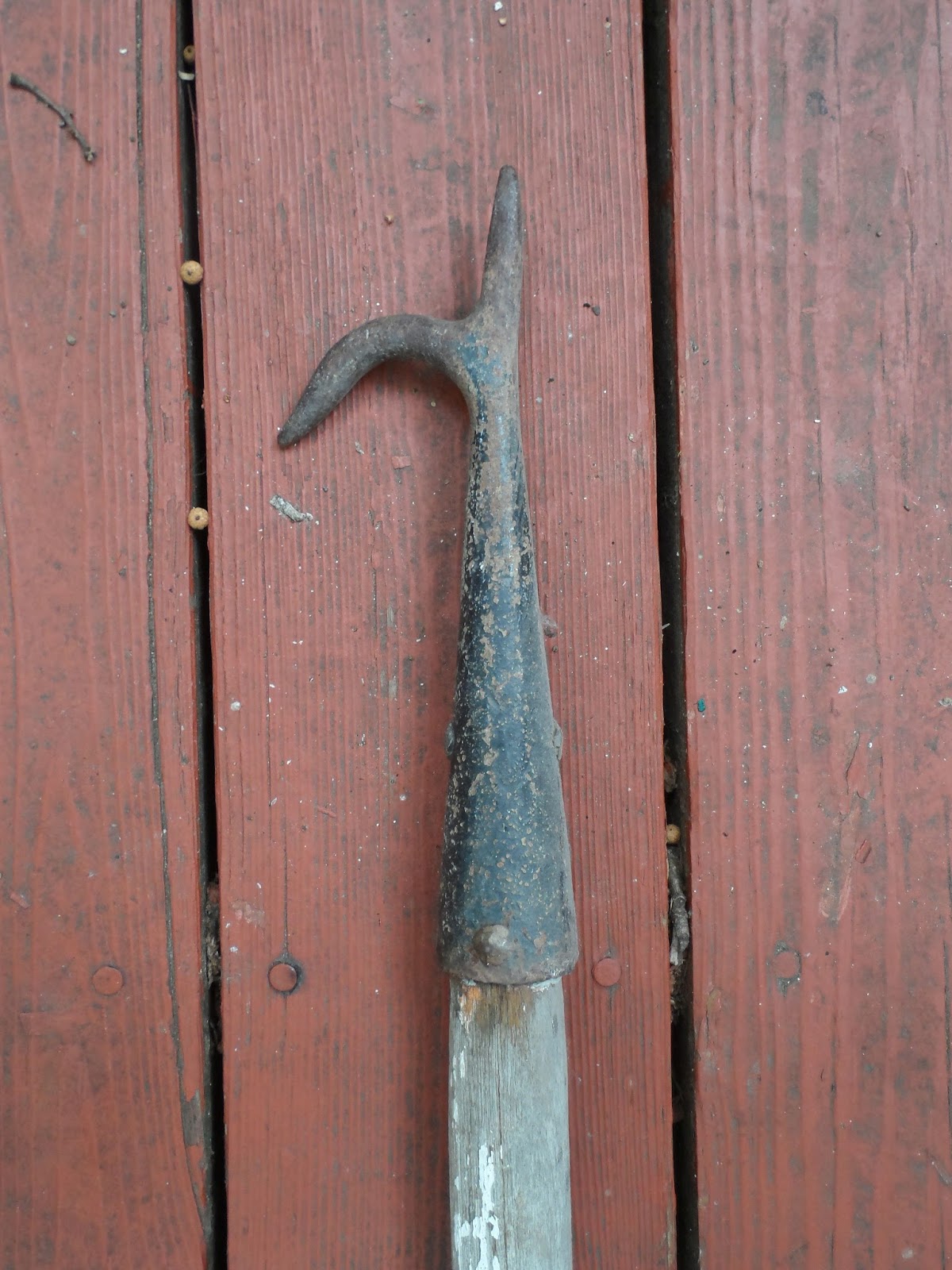
    Over at Sail Delmarva, Drew has some comments on that ubiquitous tool: the boat hook
    Six months ago I was asked to review boat hooks for Practical Sailor Magazine. Everybody needs one. How dull I thought; I've never bought one, not in 30 years. I always find them by the dumpster or on the beach, and have a stack of "spares" at home that I haven't used yet. Keeps me from getting to choked up if someone drops one. Most days we just drop it in the middle of the tramp--I've never lost one from there, even in heavy going, though I generally tie it down when it starts banging into things.

    Everybody does need one.

    And low and behold it was more fun than I thought.
    • The most expensive, heavy duty model was the first to fail in the field.
    • Most would not allow me to pull with full strength without breaking.
    • The company that urged us to test, feeling theirs were best, was absolutely right.
    • I still like my 20-year-old pole for daily use.
    How about this classic crabber's  hook? It's been hanging on the wall in my daughter's room for years, after I found it tangled up in my docklines after Isabel (I left in on the dock for 2 weeks, but no one claimed it). In fact, it was perhaps the best balanced and most suitable for all-day heavy use. No surprise.

    The old guard vs. the new kids. Second from the left is my every-day pole.

    I wonder who got the bright idea that a boat hook makes a good brush pole (I'm not picking on West Marine--they are ALL like that now)? All it does is snag lines. Unfortunately, about 1/2 of them won't screw into a brush because part of the hook is in the way. And nothing can be screwed into the "take" part of the hook anyway, so what's up with threads there? Worst of all...

    ... the bulbous padded tip makes them useless for snagging a line off a piling or dock...

    Which all of the old-school poles can do easily, but only ONE of the new poles. Not an improvement in my opinion.

    Tuesday, November 17, 2015

    A Civilized Idea

    We recently returned from a trip to the UK; while there we saw a bathroom fixture which was ubiquitous there but virtually unknown in the USA:  the heated towel rack. Do you have any idea how wonderful it is to wrap yourself in a warm towel after a shower? Probably not, sadly. Oh, and the towels dry off much sooner hanging on a heated rack too.  It's a very civilized idea.

    Adam and Adrian recently installed one of these on nb Briar Rose. Theirs is hot water heated - a very common solution in the UK, where forced air heating systems are virtually unknown. If you have hot water heat in your boat, this would work for you too. (Electrically heated models are also available and only draw 75 watts or so).
    I have to work all weekend, but Adrian went up to the boat today -- taking much much longer than usual because of all the bank holiday traffic.  While Briar Rose has been at Calcutt, the leaking radiator in the shower room has been changed for a heated towel rail.

    Tuesday, May 5, 2015

    New Spreaders For The Mizzen

    [Sorry about the re-post of this one. I just opened it to look at something, and Blogger turned it back into a draft. ??!?]

    This post originally appeared on Windborne in Puget Sound

    Rot.
    It's funny, isn't it - how something like this can prey on your mind - kind of subconsciously, but still gnawing away just below the surface.  Just like the rot - slow  but relentless.

    Yes, I've known about the rot in our mizzen spreaders for a while now.  And I have been intending to deal with it for all that time, but the "right" time hadn't occurred - until now.

    So I tied off the mizzen halyard to act as an auxiliary cap shroud and climbed the mast with my tools.  Removal of the spreader was far easier than my worries had been leading me to anticipate, even tho it had been up there for 37 years, untouched and uncomplaining.

    More rot at the root.
    I had decided that the replacement spar would be made from  pressure treated lumber (like the second-generation bowsprit) so that rot would never again be an issue.  Now if you have ever hoisted up pressure treated lumber at the lumber yard, you know that it is heavy.  And heavy is not good aloft on a sailboat.  But most of that weight is water:
    To pressure treat lumber,
    • it is put into a sealed vessel,
    • the vessel is evacuated, removing nearly all the contained water in the wood as well as air trapped in its porosity.
    • Then after a suitable degassing period, the water-based treatment solution is admitted to the vessel, and it is pressurized, forcing the solution deep (well kind of - see below) into the wood.
    That's why the wood is so saturated with water when you buy it.   But if you simply let it stand in a reasonably dry place for long enough, it will return to a more "normal" moisture content - and much lighter weight.  In fact, the replacement spreader is actually lighter than the old one (which of course does have a lot of water in it due to the rot).

    Well it only took a couple of hours with a skill saw, power plane, belt sander, and a router to duplicate the shape of the old spreader:


    If you've ever cut into a pressure treated board, you know that despite the violence of the treatment process, the treatment does not reach the core of the board.  And since the spreader tapers from 1-1/2" thick at the root to 1" at the tip, and from 5" to 1" side to side, a lot of wood was removed from the surface and from one side.  Tapering the thickness and cutting away the sides revealed wood that was only lightly treated.  What to do?

    People who handle pressure treated lumber day in and day out (building decks, for instance) have always had to deal with the cut ends of boards, where the untreated core gets exposed.  Long ago they found the answer:

    Want to rot-proof some wood?  This is just the ticket
     
    This stuff, which you can find now that you know its name, is just the ticket.  You just paint it on and wait for the solvent to evaporate.  Wear rubber gloves - its not nice stuff.

    Add a coat of epoxy to permanently seal the surface.
    Bed the hardware in polysulphide.

    A couple coats of paint, and et voilà!
    And now, even tho I still have one more spreader to go, it feels like an invisible weight has been lifted from me. The subconscious mental anxiety that was silently eating away at my contentment, my satisfaction, my peace, is now gone, just like the rot.

    Thursday, March 19, 2015

    Transom Project Complete

    Please welcome new contributors Nate & Jenn, newly moved aboard (August, 2014)  their first boat, the 36-foot Allied Princess s/v Aletheia.  Since moving aboard, they have already cruised from Halifax, Nova Scotia down to Ft. Lauderdale, Fla - not bad for less than a year aboard!  And one of the first things new boat owners do is change the lettering on the transom...
    We did something cool and fun this morning aboard Aletheia...we gave her an official hailing port on her transom. On top of the two previous owners' hailing ports: Florida, USA and Portland, lays Denver CO!

    We scoured local craft and hardware stores all over the East Coast only to find 3-inch letters that come individually and this likely would have been a bigger project trying to match each letter, evenly spaced, to my OCD-perfection. After asking the Universe for where to look next, a fellow blogger at TheBoatGalley.com suggested  DoItYourselfLettering.com. Winner! After just a few minutes on the website, t'was a no brainer. Customization out the wazoo, with hundreds of fonts, more than a dozen colors, sizes and several grades of vinyl, depending on your specific needs. 

    Before beginning such a project, we checked the requirements for US Coast Guard Documented vesselsAccording to the USCG, the required letter height on a recreational vessel needs to be at least 4" tall. DoItYourSelfLettering had everything we needed, and we ordered it from the boat! No more traipsing around!

    Since we only need a hailing port, we matched the font as best we could with her name. It costs $20, shipping included. Other signage companies can easily charge upright of $75-100 for similar apply-it-yourself lettering. 

    Denver, CO came in one long piece with easy, detailed installation instructions - fairly foolproof. They even guarantee "anyone" can install the lettering and if there are any problems with the installation, they will send a replacement at no cost. I'll admit I was a bit nervous, but we walked through our installation process a few times and it came out great! No need to request a replacement! Thank you DoItYourselfLettering for making me feel like a pro!

    I highly recommend this company both for personal and professional projects.

    Here are some pics of our install:


    Step 1: Green tape applied as a "hinge" to set the location of the name
    Step 2: Remove the backing off the label
    Step 3: Pull taut and adhere to the surface, scraping the overlay to remove any air bubbles 
    Fine-tuning
    Since we have drainage holes on the transom, we cut around to make sure the surface area is flat. So far, so good! 
    It's working!
    Complete Success in about 10 minutes!

    That's one less project from the to-do list. 

    Love to all,
    Nate & Jenn

    Tuesday, March 17, 2015

    Out Damned Spot!

    This is a mash-up of posts which originally appeared on Windborne in Puget Sound

    On Eolian's decks hundreds of black spots have been slowly appearing, and have been doing so ever since we repainted the decks.  They don't grow fast, but they do grow.  Nothing seems to touch them - using straight bleach has no more effect than plain water.


    Supposing that these are some form of lichen, I did some research - it is such a wonderful thing to have the bulk of Man's knowledge at your fingertips!
    Guess what?  Algae, moss and lichens suffer grave bodily harm when exposed to a particular class of chemicals.  Well I guess that part is not a surprise.  But this part is:  that family of chemicals is relatively harmless to virtually everything else.  In fact, it is the active ingredient in Bactine:  benzalkonium chlorides.

    Now here's the next surprise.  No, you don't have to buy 100 bottles of Bactine and distill it to get the benzalkonium chloride - all you have to do is go to the pool/spa section of your local hardware store and buy a bottle of HTH Algae Guard:

    And it was less than $10!

    This is a 30% solution, and yet a 2% solution is supposed to be adequate for killing algae/moss/lichen.  

    So, the first test is a kind Hippocratic one.  Does this stuff harm the Sunbrella canvas on the boat?  I uncapped the bottle and put some of the straight 30% solution directly on a scrap of our Sunbrella and left it to dry.  After rinsing it out 24 hours later, there was no detectable effect on the canvas.  At 30%, the solution has a blue tint - I suspect this is just a dye for appearances, given its intended use. Our canvas is green - if yours is white, you might want to repeat this test.

    For the next test, I made up a 6:1 dilution (5%) solution in a hand spray bottle and applied it to a section of the deck with the lichen, and a portion of our canvas which has a liberal infestation of winter algae on the outside.  I also applied it to the inside of the canvas directly over our galley vent where we get the most amazing colonies of...  well, life I guess, apparently feeding on whatever the vent delivers to the canvas.


    After

    The benzalkonium chlorides definitely killed the lichen.  But it did take a mild scrubbing with a brush to remove the corpses.  Please note that previous scrubbing with the same brush and bleach had no effect on the spots.  I apologize that I used a washer for the sizing comparison - I didn't have a dime in my pocket.  The washer is a little bigger than a dime and a little smaller than a nickle.

    I also applied the 5% benzalkonium chloride solution to a portion of our dodger canvas.  Please note that this canvas is more than 10 years old, and has lost most of its water repellant qualities - that's why the mold/mildew can live in it.

    Untreated

    Treated
    The "After" photograph does not do the results justice.  The mold, mildew and algae are all dead.  A couple of rainstorms washed the bulk of the corpses away, except at the seams.  But more rain is coming (of course).

    Conclusion

    This stuff works!  And Jane tried it on the moss on our driveway at a 3% concentration, as another experiment.  It worked there too - the moss is all dead.  In fact, using a 5% solution was probably overkill - my next application on Eolian's canvas will be at 3%, but I think I'll retain the 5% level for the tough-to-kill lichen on the decks.

    Wednesday, February 11, 2015

    Nano-tech Experiment #3 (and reports on #1 and #2)

    This post originally appeared on Windborne in Puget Sound

    This is the third experiment with the Rustoleum nano-tech product called "NeverWet" - a super hydrophobic coating that can be applied from a spray can.  (Experiments #1 and #2 are here and here.)
    For this experiment, we will be seeing how long the retained air film persists, and if the nano-coating has any anti-biological properties in sea water.  I think it might, since the retained air film could make barnacles and such uncomfortable, or might even prevent them from touching and attaching to the actual surface.  We'll see. 
     

    Here's what I did:
    • I took a scrap of fiber-reinforced ABS plastic (left over from the refrigerator refurbishment) and masked off one side of it.  The other side got the NeverWet treatment.  I suspended it (from the hole you can see, partially covered with blue tape) in the water off our finger pier at Anacortes on December 21, 2014.  The finger pier is a floating one, so the coupon will never be exposed to air, except when I lift it up for inspection.

    Report on Experiment #1


    Experiment #1, as of Dec 2014
    Experiment #1 began more than a year ago, in October, 2013.  For this test, I applied the NeverWet to our canvas sea hood. All was well until Nature's own nano-tech (pine pollen) arrived on the scene.  It coated and buried the NeverWet, and allowed water to once again wet the surface.  In an attempt to remove the pollen, I gently wiped part of the surface with a sponge damped in soapy water.  As you can see, that portion of the surface never recovered its hydrophobic properties.  Whether it was the mechanical action of the sponge or the surface tension-destroying property of the soap, I will never know.  But the portion of the sea hood that did not suffer from pollen accumulation or the soapy sponge is still every bit as water-repellent as ever.  From this I can propose that the coating is not strongly affected by UV.

    Report on Experiment #2

    Experiment #2 began in April of 2014, when I applied NeverWet to our dinghy propeller. It was amazing to see that the submerged prop looked like it was made of polished silver due to the thin layer of air it retained while submerged.

    We used the dinghy normally for the entire 2014 season, giving no further thought or special attention to the prop.

    By the end of the season, the nano-tech coating had ablated off the outer 1/2 of the propeller blades, but was still active on the inner half.

    From this I conclude that NeverWet is not suitable as an anti-barnacle coating for boat props (guess we're still stuck with Barnacle Ban), but it could likely serve well on things that do not suffer from the abrasion of high-speed turbulent water contact.

    The Future

    It is the results of Experiment #2 that led to Experiment #3. Experiment #2 showed that the air film persisted while submerged over periods of days, and even in the presence of extreme turbulence. Will it be retained for months on end? And if indeed the retained air film is effective at retarding or preventing biological growth, NeverWet could serve for difficult-to-protect items such as depth sounder or speedo transducers.  And if the price could be gotten down low enough, perhaps NeverWet could even serve as a bottom paint alternative (for sailboats at least).

    Tuesday, February 3, 2015

    New Year Gear and Tool Review: Bonding with Bondic

    If you go to a modern dentist, you are probably already familiar with UV-cured adhesives.  I have never seen them available for the consumer market.  But Brian over at Dock Six (in Canada...) has...
    "Now you oughta make it stick together..."
                                       -Wilbert Harrison


    As you know, Constant Readers, I basically have three modes- building stuff, breaking stuff, and sailing.

    (No, Smartass Reader, "drinking and eating" is NOT a mode.  It is an integral part of the Three Modes.)

    Intrinsic to successful functioning in any mode is the necessity to keep things from falling apart all around, you...

      .... and putting them back together when they inevitably do.

    Thus, I am always looking for better, faster, easier, stronger ways to build what is needed and fix what is busted.

    Which is why I have an assortment of tubes and vials and bottles of various adhesives, of varying efficacy,  taking up real estate on my workbench and locker space aboard.  By and large, my go-to solution for most bonding jobs is epoxy of some sort, but one challenge with epoxy is that it has a LONG cure time, which makes it unsuitable for quick, clamp-free fixes.  Even quick curing epoxy isn't all that quick.

    Cyanoacrylate, the Krazy Glue-type stuff, IS instant, but that presents it's own brand of problems, because once two objects are stuck together they are stuck, like, NOW.  No repositioning, no time to get your fingers out of the way, or your sleeve, or to remember that you're working on a freshly refinished uncovered table...

    What if there was an epoxy that had the fast cure time of cyanocrylate, but only when you wanted it?


    Enter Bondic.

    The  folks at Bondic describe it as "the world’s FIRST liquid plastic welder."  There's all sorts of super-secret proprietary sciency stuff involved that makes it unique  but basically it is an ultraviolet cured adhesive.  What really makes it unique is how it works.

    The Bondic kit consists of an adhesive cartridge and a 6 volt UV light..... packed in a cigar sized shiny case.


    packed in a cigar sized shiny case.


    It's as foolproof as an adhesive can get- clean the objects to be bonded, and sand shiny surfaces- this stuff likes a little "tooth, just like glue....


    apply a bead of Bondic to one surface, by gently squeezing the cartridge, just like glue...


    Then, here's where things get different. Shine the UV light on your work for 4-8 seconds...


    BOOM!  Cured, like a true believer at a tent revival.


    Because of the fast cure time, Bondic can also be used as an effective filler for small jobs, applied in layers, curing each layer.  Busted the corner of your cell phone case?  Sand,  apply Bondic, cure, sand, apply Bondic, cure, sand, apply Bondic, cure, etc.  as needed.

    Downsides?

    Because of the application system and UV light size, Bondic is best for SMALL jobs.

    And not many of them.  This review almost exhausted the cartridge.

    Tensile and shear strength is not Bondic's, er, strong point.  I bonded two scrap pine battens...


    Then pulled them apart...  easily.


    I then tried again, thinking that a thicker layered "fillet" might be more effective...


    ... it is...but not much.  The battens still came apart easily.

    Bondic IS waterproof, but, just like epoxy, it is sunlight sensitive- outdoor applications will need to be topcoated

    It's not a great structural fastening adhesive, but it has potential for effective, quick small repairs aboard- broken sunglasses, cracked vhf radio housing,  broken tangs on light lenses,  that sorta stuff.

    Cost?  The kit cost about $20, refill adhesive cartridges are about $12, a replacement UV light about $7.

    Not cheap, but cheaper than a new Otterbox for your iProduct.

    Bondic likely won't be the first adhesive you reach for, but it might just be what you try when nothing else will work.


    Talk the Dock!

    Tuesday, January 6, 2015

    Galley Gear Review: Nice Nesting Pots and Pans

    Over at Liebster-winning Dock Six, Brian reminds us of a marine truism: "No boat is ever big enough." And he has a solution for it:
     No matter how big the boat, every boat is too small.

     Especially the galley.

     When it comes to boat galleys, to paraphrase James T. Kirk...

     Space is the final frontier.


     NextBoat*'s galley has more storage capacity than Whiskeyjack's  galley, but "more storage capacity" is a relative term.  That is like saying that your humble scribbler here is taller than the average 9 year old child.

     That doesn't make me a giant.

     Ergo, maximizing space is paramount.  The more stuff you can fit into the existing space, the more comfortable your life in aforementioned space.

     Hence my interest in a set of nesting cookware.

     Every year at the boat show I look for a deal on cookware. I like the quality of the Magma set...

    image courtesy of  Magma

     ...but I don't like the inventory-  there are four pots, but only one pan, in the 10 piece set.  Those of you who have read any of the Two-Burner Tastiness recipes understand that I'd rather have two pans, and one less pot, but that isn't an option.

     So, my search continued.

     Until early this summer.


      Wandering through the camping department of my local Canadian Tire, last June, I made an impulse buy.

      (why am I not surprised? - ed.)

     
    I had just picked up the bottle of lamp oil I needed,  and on the shelf right beside the lamp oil was the camp cooking gear.  There were the usual speckled enamel suspects, the stuff that looks rustic and rugged, right up until the moment you actually use it, but in the midst of the sea of stamped-in-China-great outdoors-nostalgia-ware  was a  SALE ! tag, under a carton of cookware that looked...different.


     So I bought it.


      Yeah, I'd never heard of "Lagostina" either.

    No, those not-shrimp, not-prawns, not-crawfish, not-lobster things?  Those are LaNgostinOs.

    Which can be cooked in a Lagostina pot.

     Here's the deal:   Lagostina is an Italian firm that has been manufacturing stainless steel cookware for decades.  Their "Campeggio" line is their, as the name implies, line of camping cookware, but while it is compact in size, it is not compact on quality.

      These pots and pans are constructed of 18/10 stainless, with three ply (stainless steel/ aluminum/ stainless steel) bottoms for even heating. fold down the handle on the large stock pot and ...


      Keep going and in rapid succession you get...


     Two, count 'em, TWO pans...


     ...Two stock pots...


     ...Two lids that fit both pots and pans....


      ... and a grip-anywhere, go-anywhere insulated pot/pan handle that is both ambidextrous and has hooks for removing hot pot lids, like when you are steaming Langostinos.

     Both pots are graduated, which is a nice touch...


      ...for measuring the exact amount of liquid for boiling langstinos


     Also included is a mesh carrying bag... that was promptly repurposed forother uses aboard.

     After 5 months of use, both SWMBO and I can confirm,  we LOVE this stuff.

     All pieces heat evenly, the bottoms don't warp when warm, the handle is substantial, the construction is solid,  the non-stick is real non-stick, and, most importantly...

      ... These were the ONLY pots and pans we have used for the last 5 months, and we haven't needed to buy more.  Cooking for 2-4 on a 2 burner  stove?  This is all you will likely ever need.  It is all we have needed.


     Here's an example:


      Cracker crusted pork chops, "Booker T"  mashed potatoes and peaches and cream corn- two burners, three pots, from one nesting cookware set.

     Oh, and a bottle of Ramblin' Road DPA


      Surprisingly, although less than half the price of the smaller one-pan Magma nesting set, the Lagostina cookware comes with a 10 year warranty, compared to the Magma's I year warranty.  I am impressed. Retail price at our local Canadian Tire Store  was $119.99 cdn.

      The only challenge is where to find it outside of the Canada.

     Or Italy.
     
     If anyone wants a set, let me know.   I'll pick it up for you and ship it out- for actual cost.


    Thanks for checking in, and please,
    "Talk the Dock!"
    Related Posts Plugin for WordPress, Blogger...