The spinnaker receiver bag normally lives folded and rolled up out of the way against the heads bulkhead. It slides back and forth along two thin lines secured to the ceiling of the coachroof with omega fastenersWhen it's time to bring down the kite (chute) I undo the little retaining cord and unhank first one side, bring it out and backThen the other one, so the four hanks, one at each corner, hold the bag open. As a refinement, I added two thin battens, one on each side, to stop the bag from collapsing. There is no need for athwartship battens a the separation of the lines keeps the bag open if the slider lines are taut enough.For a larger bag or looser runner lines, additional athwarthsip battens could prove usefulThe crew sitting at the "piano" position slides the bag back to receive the kite as it's handed below, passing under the boom, by the deck hands:The bag is made of mesh rather than sailcloth for better airing.Usually we bring the kite down with halyard and sheets, hoist the foresail (in more haste if rounding a mark!) and then clip halyard and sheets together and pass them back to the deck crewThen we slide the bag with the kite forward, unship the bell, hang the head, clew and tack rings there and sort the package before stuffing it into the sailbag.The receiver bag does double duty sliding it halfway to receive wet foulies. if weather permits, sliding it directly under the coachroof hatch for airing.Also a good place to chuck in mooring lines, fenders, etc. temporarily until they're sorted out properly.I also screwed in four omega fasteners under the forehatch, to move the bag over there to receive foresails when it's time for a sail change. The G1 is a tight fit but the other foresails make it.




Surely I did peek to garbage cans for a while then before emptying the content of our household bin. Yes, there were no plastic bags used then. All went to the bin, we would fold an old newspaper on the bottom, and the bin would have to be cleaned from time to time, because it would start to smell quite badly. I guess we were quite ecological back then, regardless of the fact that people didn’t know much about being ecological.
But the times they are a-changin’ and we buy and discard on a daily basis. Those who take a screw driver and disassemble are breaking warranties and are being labeled as handyman or in more contemporary lingo as hackers.
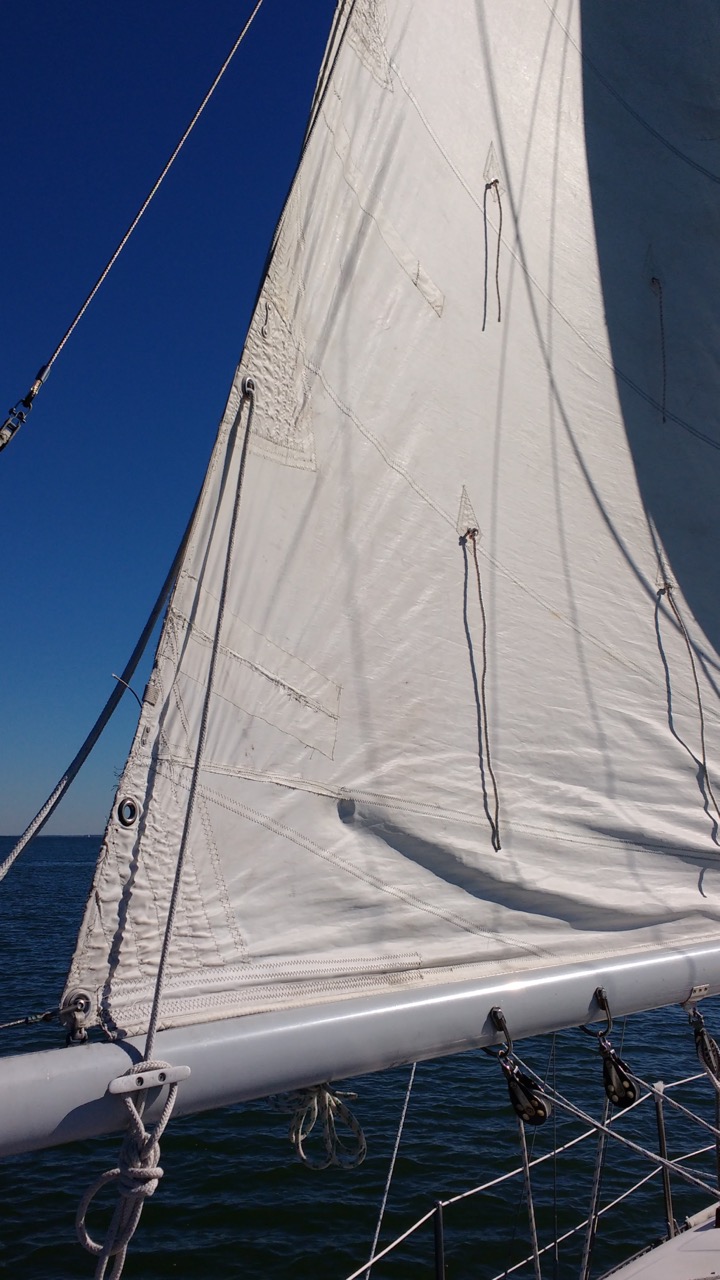
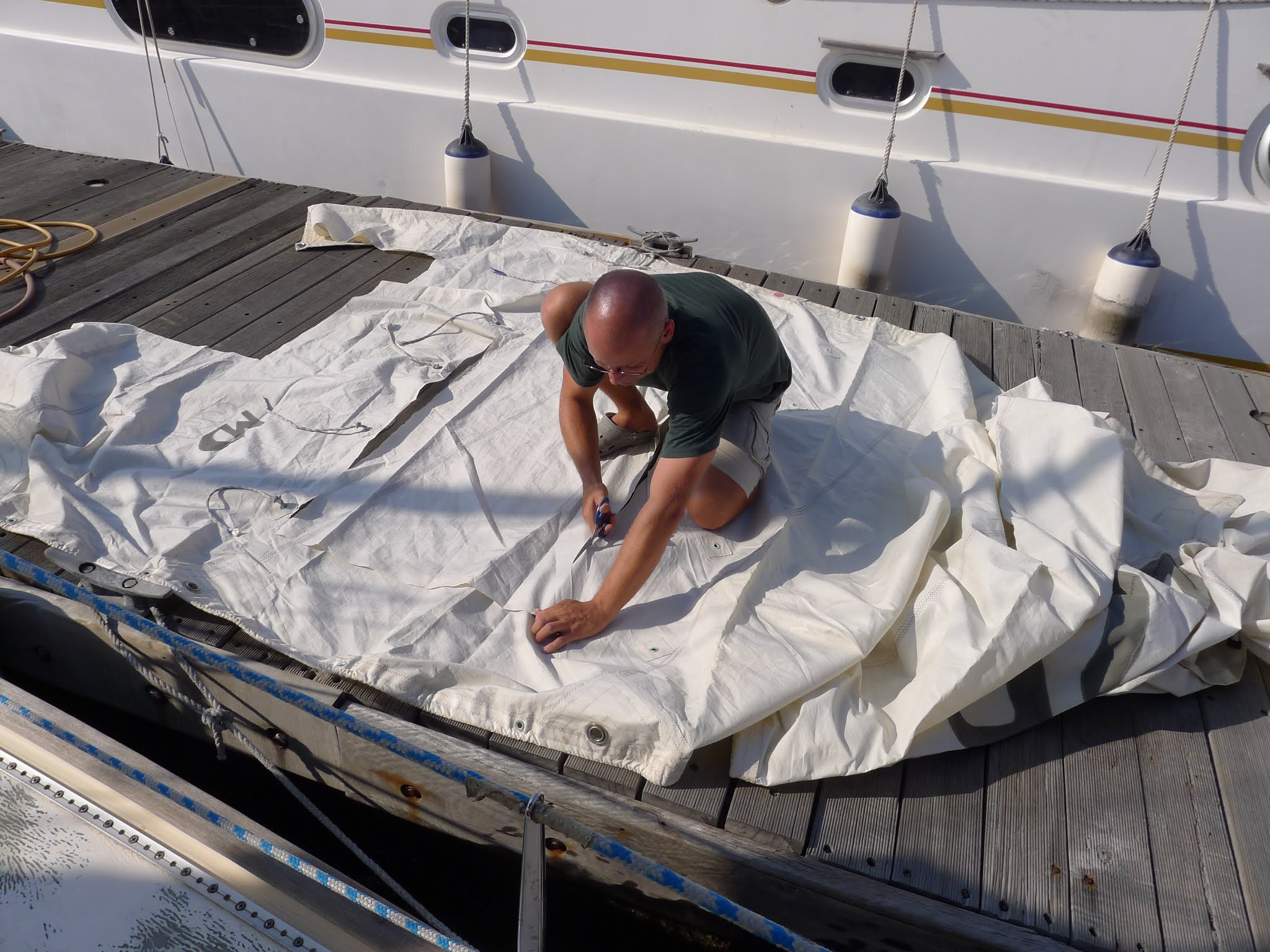
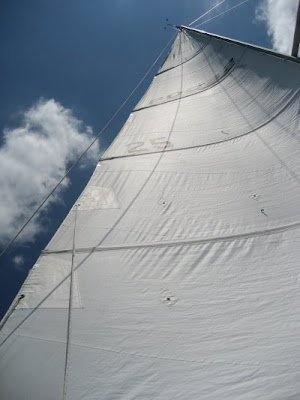
I digress, however. We try to remain faithful to our promise to the mother Earth and create as little garbage as possible. Thus, knife in one hand scissors in the other, I started butchering one of our old mainsails. You see, right now we have three mainsails on board. A very old one, then the one that was rigged when we bought the boat and now the new one, we just bought in Hong Kong. The time for the other too has come, holes here and there and patches, chafed all around, grommets corroded, leech lines, stuck to the fabric.
I stretched that large piece of shred and started to plot my attack. We need leecloths, helmsman awning, weathercloths, and couple of bags for lines, bag for cloth pins, there’s never enough bags on a boat. So far we’ve been using plastic bags (sic), because there’s such an abundance of those things and especially in Taiwan, most things are usually packages at least twice. Receiving piles of plastic bags seems unavoidable, but it’s time for us to say no. Not to mention that some of the plastic bags are so noisy.
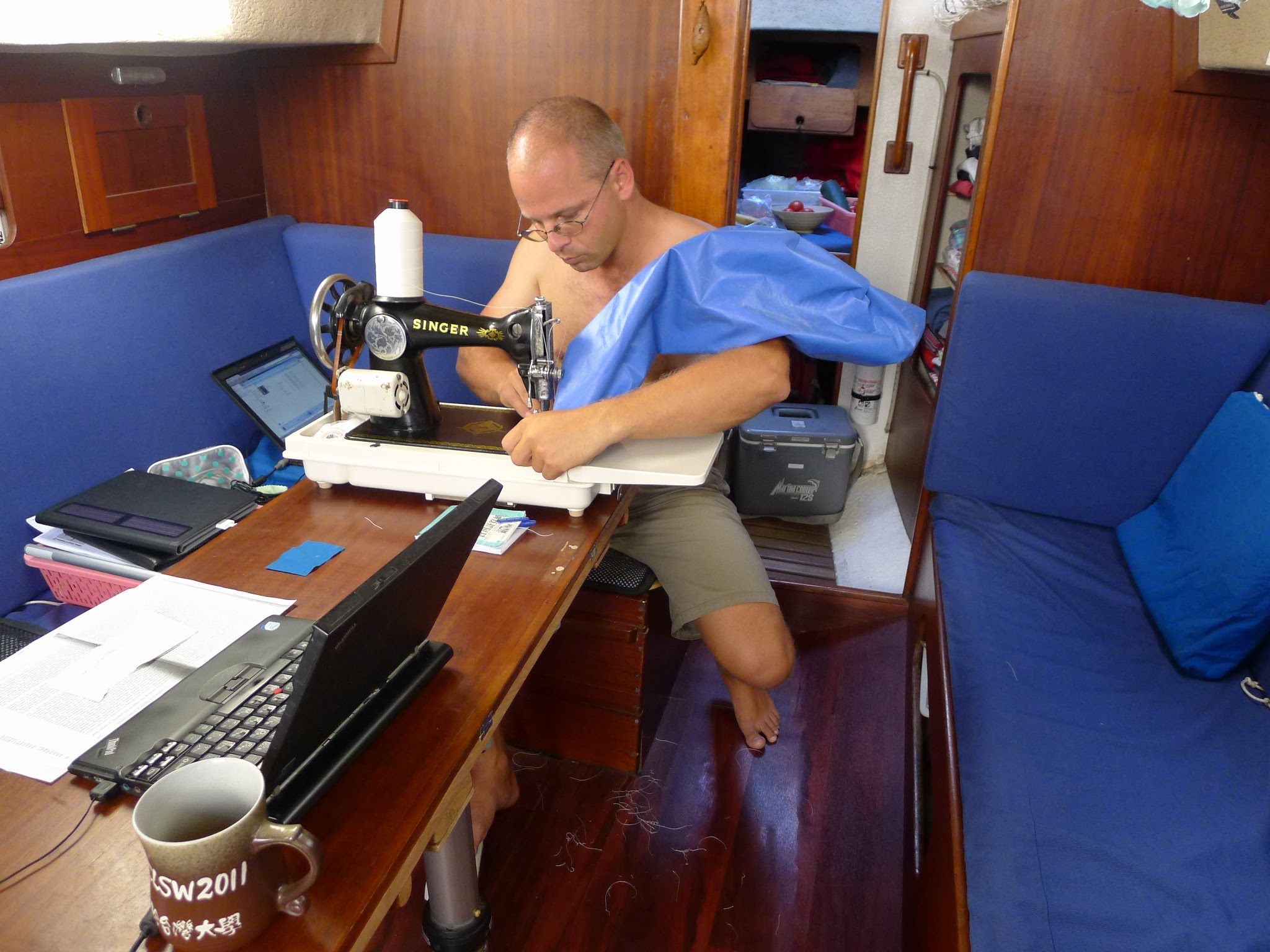
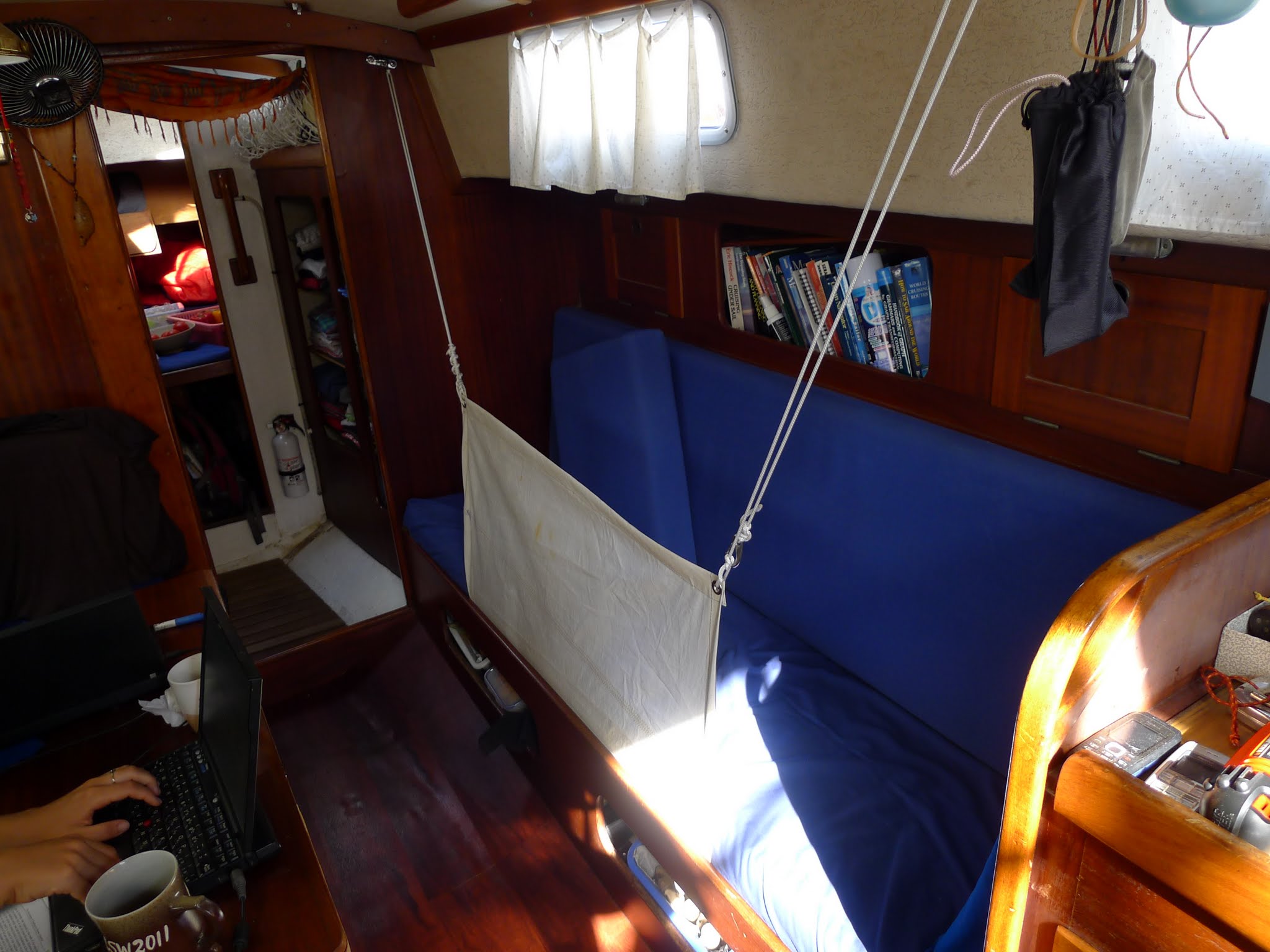
So after a few hours effort, we got new leecloths, bottom firmly screwed to our berths and the top hanged on the cabin handholds and a massive eye through bolted to a bulkhead. We can stretch nice helmsmen awning, called “the square” over our cockpit. Our 100m mooring lines are now stowed properly in their own bags, line flaked inside so that it can be let out quickly without snags. And we have a new bag for a mainsheet in the cockpit (the photo of which will remain unpublished, because it’s a recycled cover from an outboard and it does not look particularly nice – but it works…).
In the conclusion I can say only this: Long live our fabulous Singer machine!




 Posts
Posts


