Yesterday we had plans to make a quick run in to Basseterre, the main city here, to stock up on groceries. Alas, quick was not meant to be. When I went to fire up the engines prior to raising anchor, I found that our port engine was on vacation. Sigh. A fair amount of troubleshooting went on following that discovery. Perhaps I’ll write about that later. What I will say is that, at one point, I removed the carburetor and the most difficult part of that job was trying to get the two main nuts back onto the bolts when I went to reinstall it. I really didn’t want to drop the nuts in the water. Seriously!
4-stroke carbs are definitely more complicated
than 2-stroke carbs!
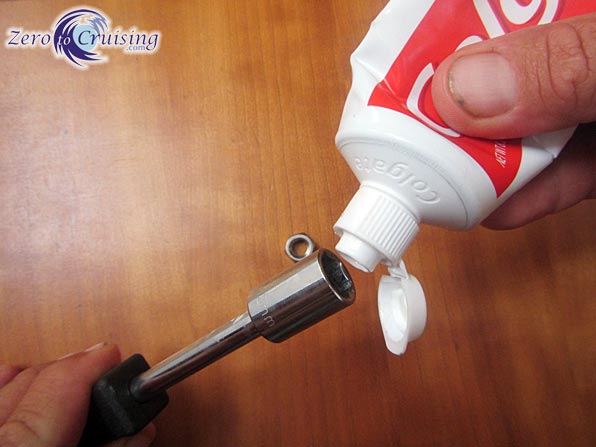
After a few tense moments fiddling with the nuts, trying to squeeze my fingers into a space too small for them to fit, I remembered a tip that our friend Kirk shared with me, illustrated in the following pics. Of course, when he described the trick, he suggested using grease. As I didn’t have any immediately handy yesterday, I improvised with toothpaste. Guess what? It worked perfectly! I would recommend that, if you decide to use toothpaste too, you wash all of it off your tools and parts when you’re done. I have no idea what the long term effect of toothpaste is on metals.




 Posts


Amazing Grace? Yes and No
12 years ago


just don't get the toothpaste tube mixed up with the 5200...
ReplyDeleteAnother great use for tooth paste is installing plastic ball bearings in travelers or furlers; it washes out, leaving a nice clean job.
ReplyDeleteThis is a great trick, thanks! I can't tell you the frustration I went through over a lost nut recently. This would have helped and saved a lot of time.
ReplyDeleteI'd avoid using toothpaste and always go with a compatible grease or antisieze compound. I feel that the toothpaste has silica, an abrasive and can cause unwanted consequences to your hardware.
ReplyDelete